
Business cards are still relevant in 2026, but the way we use them has changed.
For decades, a business card was a small printed reminder of a conversation. You met someone, handed them a card, and hoped they would keep it long enough to remember you. But in a world built around smartphones, instant communication, online profiles and digital follow-ups, the traditional paper business card can feel limited.
That does not mean business cards are outdated. It means they have evolved.
Today, the most relevant business card is not a piece of paper that gets lost in a wallet. It is a digital business card that can be shared instantly, updated anytime and used to turn real-world conversations into real leads.
Why business cards still matter

Networking has not disappeared. People still meet at events, conferences, offices, showrooms, restaurants, trade shows and client meetings. First impressions still matter. Contact details still need to be exchanged. Follow-up is still where opportunities are won or lost.
The problem is not the idea of a business card. The problem is the limitations of a traditional one.
A printed business card can only hold a small amount of information. If your phone number, job title, website, branding or social links change, the card becomes outdated. If someone loses it, the connection is gone. If you hand out hundreds of cards at an event, you have very little visibility over who actually engaged with you afterwards.
In 2026, a business card needs to do more than share a name and number.
It should help people save your details, visit your website, connect with you online, book a call, send their details back to you and remember who you are.
That is where digital business cards have become far more relevant.
The rise of the digital business card
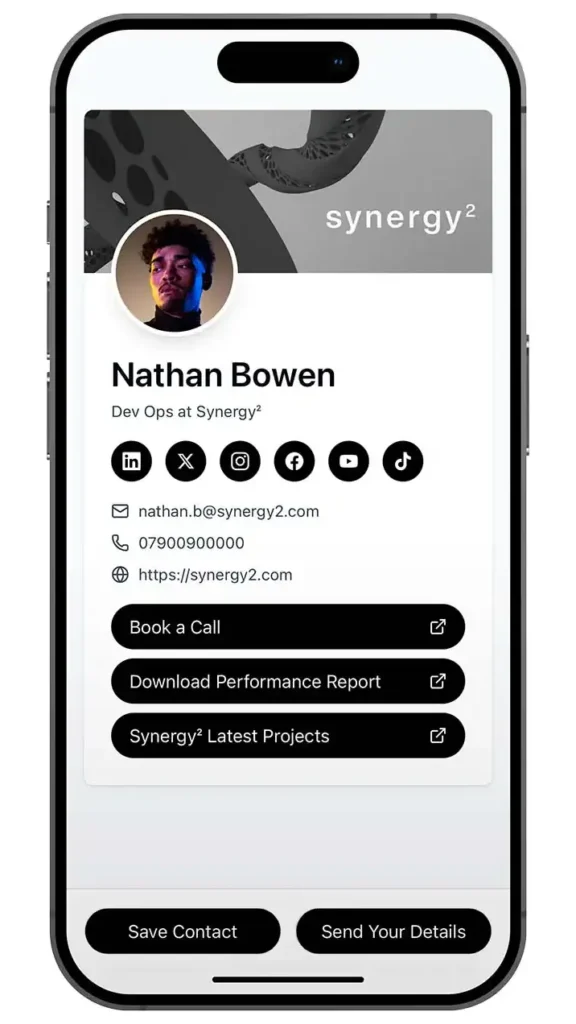
A digital business card is an online profile that holds your key contact details, links, social profiles, company information and actions in one place.
Instead of handing someone a printed card and hoping they type your details in later, you can share your digital business card using a QR code, an Apple Wallet or Google Wallet card, a link, an email signature, or an NFC card.
When someone opens your card, they can save your details directly to their phone, view your links, send their details back to you and take action immediately.
This makes digital business cards especially useful for modern professionals, sales teams, business owners, recruiters, consultants, estate agents, creatives, event teams and anyone who regularly meets new people.
Why paper business cards struggle in 2026

Paper business cards still have their place, especially for luxury branding, creative print finishes or traditional industries. But for most businesses, they come with several practical problems.
They go out of date quickly. A job title changes, a website URL changes, a rebrand happens, or a team member leaves. Suddenly, hundreds of printed cards are no longer accurate.
They create waste. By default paper business cards are single use and a disposable item.
They are hard to track. You do not know who viewed your website, saved your details or showed interest after receiving your card.
They create friction. The recipient still has to manually type details, scan a QR code, search for you online, or remember to follow up later.
They are not built for modern customer journeys. A paper card can point people somewhere, but it cannot easily capture leads, show analytics, update in real time or support a growing team.
In 2026, that is a big limitation.
| Feature | Apple / Google Wallet Card | Paper Business Card |
|---|---|---|
| Always on your phone | Yes | No |
| Can open a live digital profile | Yes | No |
| Can be updated anytime through your profile | Yes | No |
| Lets people save your details | Yes | Manual entry needed |
| Can include links and socials through your profile | Yes | Very limited |
| Can capture leads through your profile | Yes | No |
| Needs reprinting | No | Yes |
| Free to use | Yes with Tapzo only | No |
Why digital business cards are more relevant than ever
Digital business cards solve many of the problems that paper cards create.
You can update your details anytime without reprinting anything. You can add more than just a name and number. You can include your website, social links, booking links, brochures, videos, review pages, payment links, menus, property listings, portfolios or anything else that helps someone take the next step.
You can also use your digital card across multiple touchpoints. It can sit in your phone wallet, appear in your email signature, be linked to an NFC card, be printed as a QR code, or be shared in a message.
This means your business card is no longer a single physical item. It becomes a flexible networking tool that works wherever you meet people.






A better way to capture leads
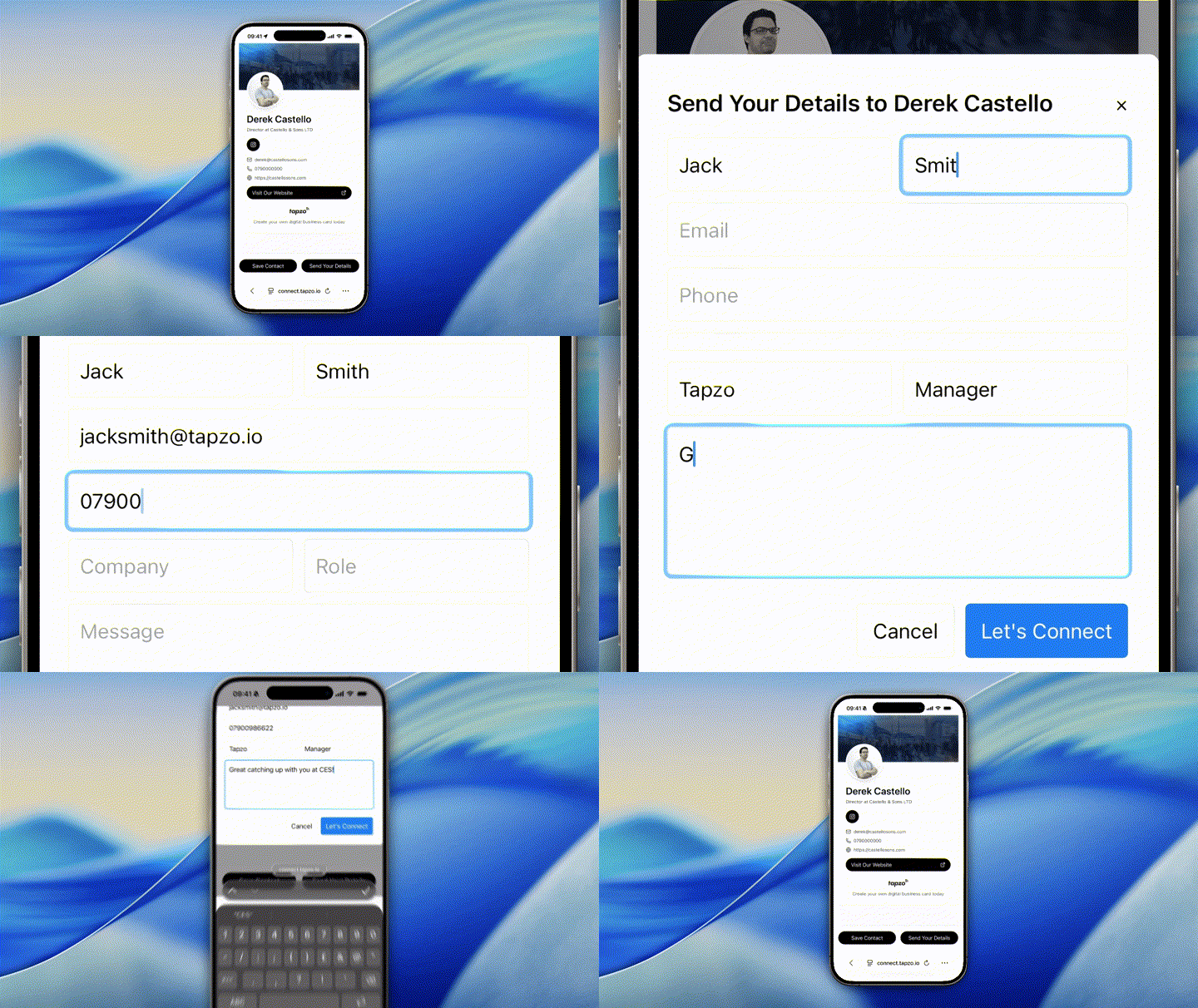
One of the biggest advantages of a digital business card is the ability to turn a conversation into a lead.
With a traditional business card, the exchange is usually one-way. You give someone your details, but you may not get theirs back. Even if they seem interested, you are relying on them to follow up.
With a digital business card, the recipient can send their details back to you instantly. This makes it much easier to capture leads at events, exhibitions, meetings, sales visits or networking sessions.
Instead of ending the conversation with “here’s my card,” you can end it with a useful next step.
That might be:
This is where digital business cards become more than a modern replacement for paper. They become part of your sales process.
Physical cards are not dead either
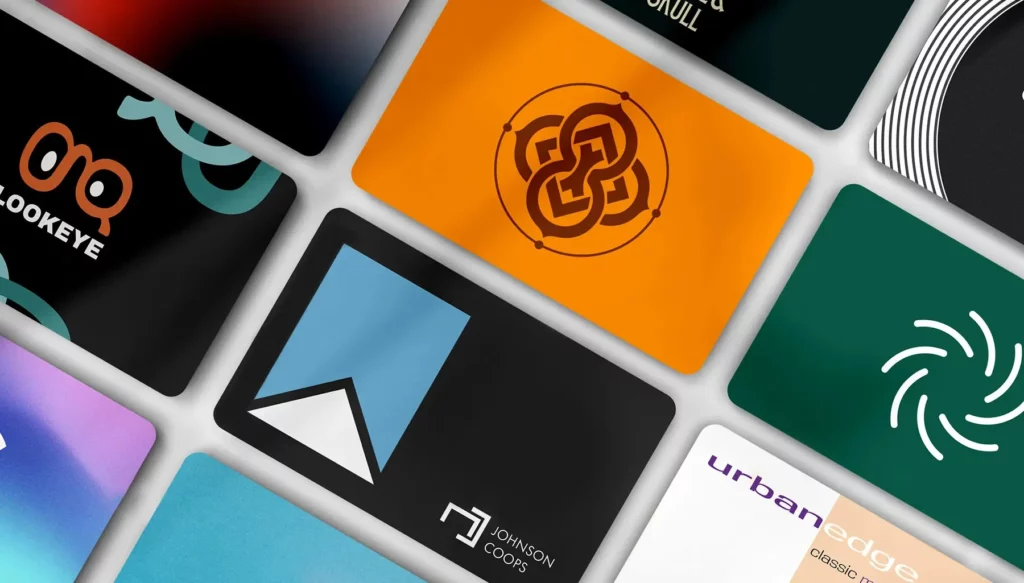
Going digital does not mean you have to lose the physical experience completely.
NFC cards give you the best of both worlds. They are physical cards that can be tapped onto a phone to open your digital business card. Many also include a printed QR code as a backup.
This means you can still hand over or present something tangible, while keeping all the benefits of a digital profile behind it.
For businesses that still like the feel of a card, NFC cards offer a more modern and flexible alternative to paper cards.
So, are business cards still relevant?
Yes, business cards are still relevant in 2026.
But the best business cards are no longer static pieces of paper. They are digital, flexible, measurable and easy to update.
The purpose of a business card has not changed. It is still there to help people remember you and contact you. What has changed is what a business card can now do.
A modern business card can help you share your details, capture leads, promote your brand, track engagement, support your team and create a smoother follow-up process.
That makes digital business cards more relevant than ever.